
Escambia Previous Residents by Era
A backward address trail depends on the date being studied. Present parcel data supplies the land key. Deeds carry ownership back through named parties. Reverse directories and public census schedules add people who may never have owned the property. Maps and permits explain changes to the building itself. Start with the newest reliable source, then move toward older evidence.
| Source | Years It Covers | Where Held | What It Shows |
|---|---|---|---|
| Historical deed-book index | 1820-1982 | Escambia Clerk online | Grantor and grantee routes into deed books |
| LandmarkWeb Official Records | Modern index; start date not stated | Escambia Clerk | Parties, instruments, dates, legal text, images |
| Pensacola directories | Selected editions from 1885-86 through 1940; telephone books 1949-1954 | UWF and Pensacola Library | Listed occupants, spouses, work, and addresses |
| Federal census | Public through 1950 | NARA and library resources | Households, relationships, and location |
| Sanborn maps and permits | Edition or system specific | Library of Congress; city or county | Building footprint, materials, work dates |
| Probate and obituaries | Court and newspaper-era coverage | Clerk, library, newspapers | Kin, heirs, death, and estate addresses |
For a recent transfer, begin with the Property Appraiser and LandmarkWeb. For a mid-century household, pair a reverse directory with the public census. For nineteenth-century land, rely on deed books, plats, legal descriptions, newspapers, and probate rather than expecting a stable modern street number.
Trace Escambia Owners Backward
The deed chain is the firmest ownership trail for previous residents research, but it is not an occupant list. Resolve today's parcel in the Escambia County Property Appraiser search. Copy the current owner, latest qualified sale, parcel identifier, and full legal description before opening the recorder index.
- Find the current owner's purchase instrument in LandmarkWeb. Record grantor, grantee, recording date, instrument number, book and page.
- Compare the complete legal description with the parcel card. Reject a same-name result tied to different land.
- Search the seller as an earlier buyer. Prior-deed recitals and book/page references can point straight to the preceding transfer.
- Repeat the grantor-to-prior-grantee step through the modern index. Keep execution and recording dates separate.
- Move into the 1820-1982 historical index and deed books for older links. Use plats and legal descriptions across address changes.
- Grantor
- The seller or person conveying an interest.
- Grantee
- The buyer or person receiving that interest.
- Chain of title
- The linked series of transfers for the same land.
- Legal description
- Lot, block, subdivision, or metes-and-bounds text that can survive a street renaming.
A deed image may also show witnesses, notary, consideration language, and a return address. Those are leads to verify, not proof that every named person occupied the property.
Escambia Previous Residents Before Statehood
Escambia's deed index begins in 1820, one year before the county was created as part of the United States territory and long before Florida statehood. The scanned navigation is divided into seven periods ending in 1982. Each period separates individuals from corporations and direct seller entries from indirect buyer entries.
That long span lets a researcher follow the land behind an address even when the road name did not yet exist. Begin with the modern parcel description, match it to a subdivision plat or older deed recital, and preserve each book and page citation. A chain can cross handwritten indexes, later transcriptions, and modern images, so note which date came from which source.
Ownership is not occupancy. The territorial-era index is a remarkable land trail, but previous residents still require directory, census, newspaper, or other household evidence.
Match Escambia Households by Year
Pensacola Library holds city, telephone, and reverse or cross directories, while UWF provides a selected digitized run. Reverse volumes begin with the street and house number, then name a listed occupant or subscriber. They can reveal renters and spouses missing from deeds, though unlisted service and lost volumes create real gaps.
- Choose the directory closest to the deed or event date and check its street section first.
- Copy the entry exactly, including initials, spouse notation, occupation, telephone, and abbreviations.
- Check the alphabetical section for the same person, then move one available year at a time.
- Pair a 1940 or 1950 directory result with the matching public census schedule.
- Use newspapers, deeds, probate, and maps to explain a gap rather than assuming a move.
The federal 72-year rule makes census schedules through 1950 public in 2026. A census can add kin and relationships, but its address detail varies by schedule and enumeration practice. The full local shelf and its reading methods belong to the Escambia County city directory.
Note: A missing name may mean death, a move, military service, an omitted household, or an unlisted telephone, not an empty house.
Date an Escambia County Building
Previous residents cannot predate the structure without other evidence of an earlier building on the lot. Library of Congress Sanborn maps can show a Pensacola building's footprint, construction material, and street context for a cataloged edition. They do not name occupants. Local maps, plats, tax data, and permit records can then test when a structure changed.
Pensacola's current mapped permit series begins with the November 2019 MyGovernmentOnline cutover. An older project may require the legacy channel or a focused public-records request. In unincorporated Escambia County, Development Services is the proper custodian. First use GIS to decide whether the parcel lies inside Pensacola, Century, or county jurisdiction.
Historic central Pensacola works well with early maps and directories. Postwar subdivisions are more likely to align with plats, the 1940 or 1950 census, later cross directories, and building files. Rural north-county tracts may depend on section-township-range text and road-name history. Coastal condominiums require separate unit parcels and recorded declarations.
Vital Records Mark Escambia Lives
Vital records help place life events around an address trail, but access rules differ. Florida's statewide birth and death registration begins in 1917, with limited earlier birth material. Birth certificates less than 125 years old are confidential to eligible applicants. Cause of death remains restricted for 50 years. Marriage and dissolution certifications are generally available, while the Clerk holds marriage licenses and full divorce case files.
The Florida certificates and records gateway is the first state channel for understanding those record types.
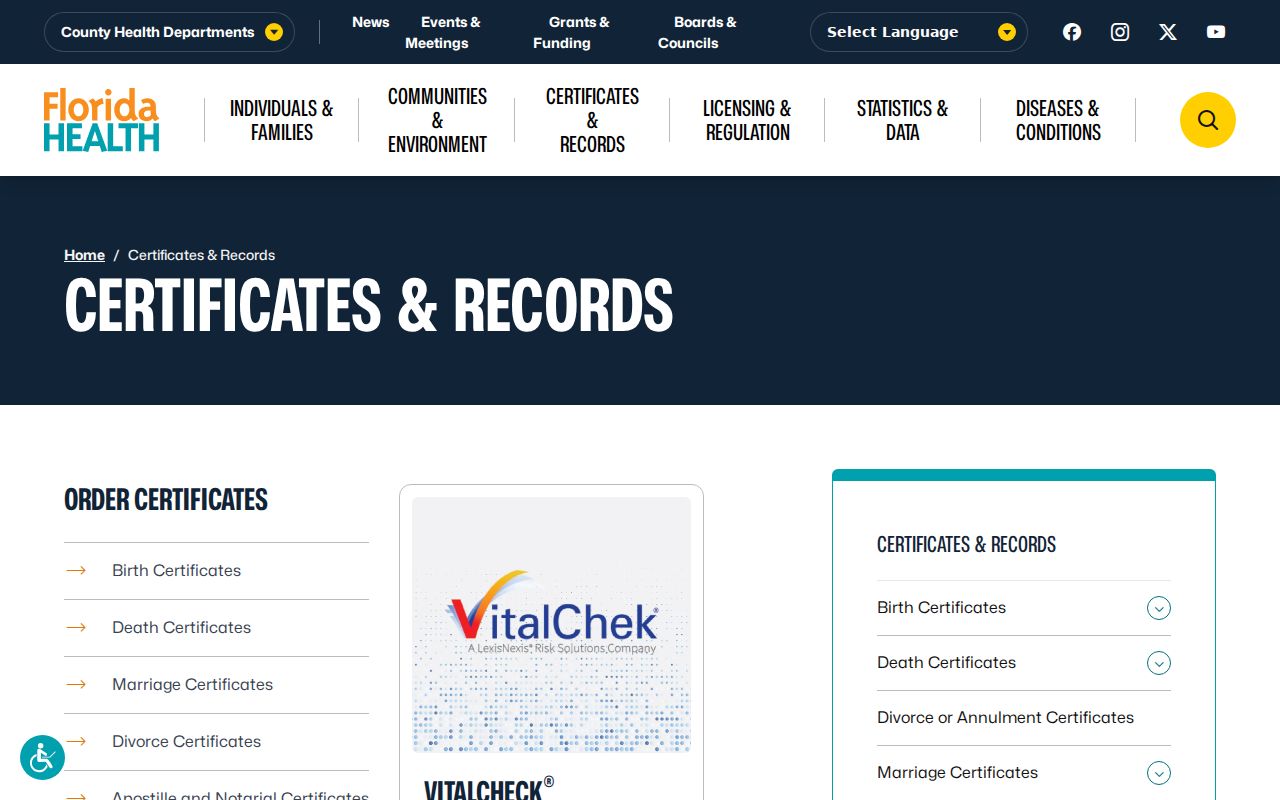
The gateway distinguishes state certifications from county court material, preventing a short event certificate from being mistaken for a full case file.
The state's birth certificate access page sets out the historical and eligibility limits.
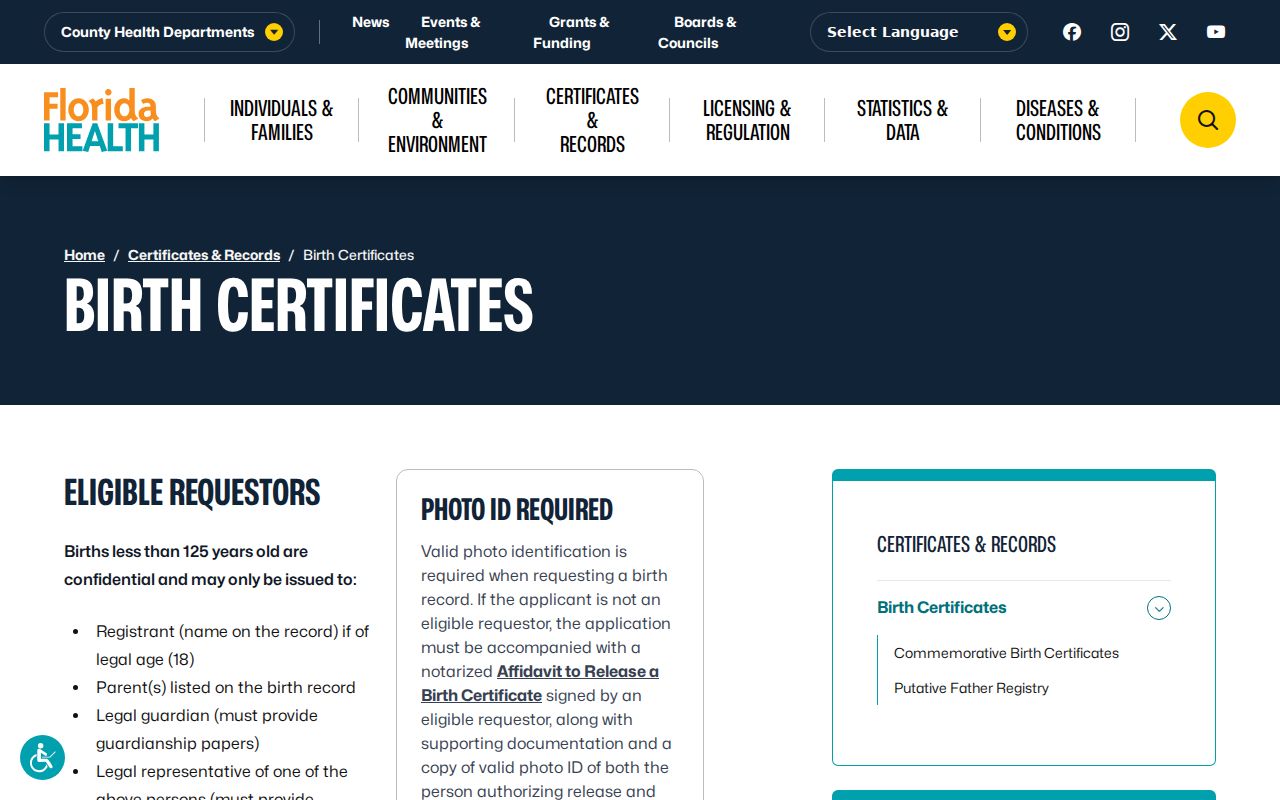
For a pre-1917 life, shift to church, cemetery, newspaper, probate, family, and directory sources rather than assuming a state certificate exists.
Order Escambia Historical Proof
Online indexes identify a likely record; they do not always supply the copy needed for careful family or estate research. The Florida vital-record forms gateway collects applications and affidavits for birth, death, marriage, and dissolution certifications.
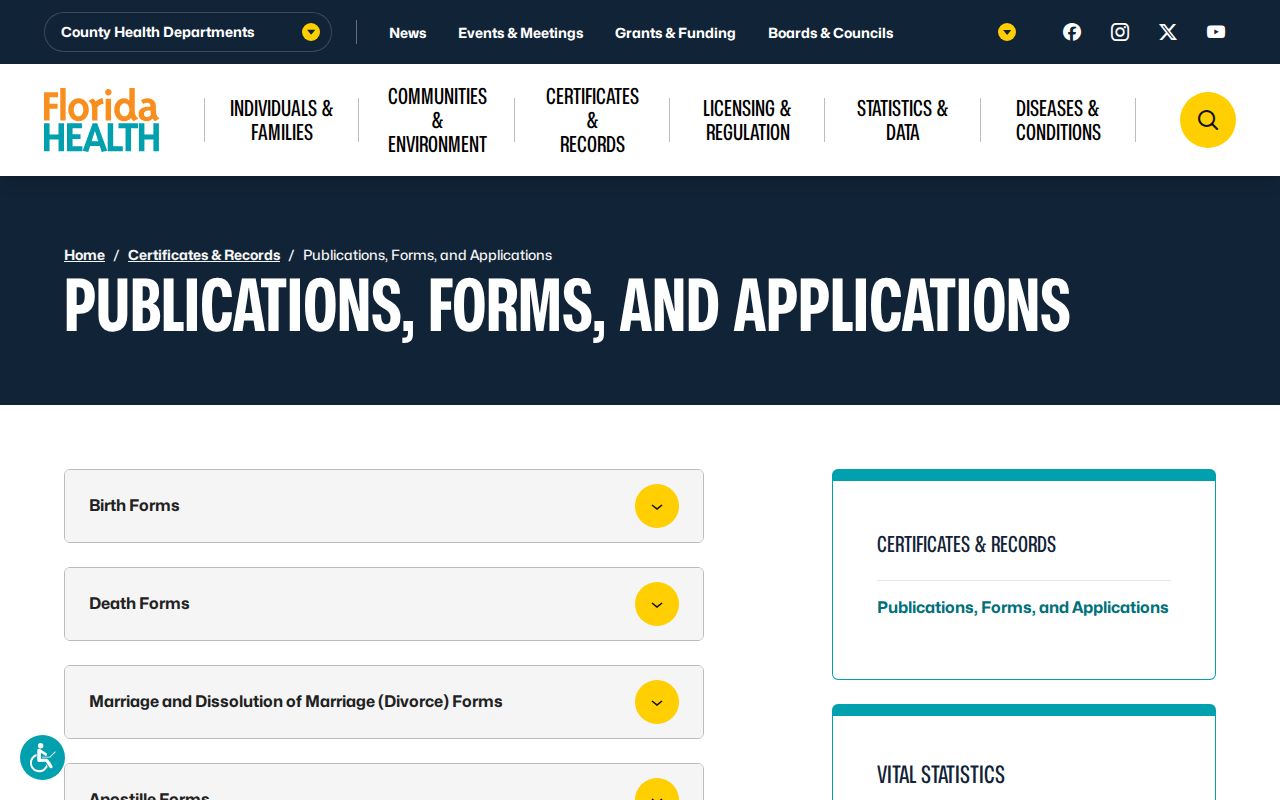
Select the form that matches the event and access class. Restricted applications require the stated identification or proof of eligibility. For deeds, the Clerk accepts counter and mail requests at 221 Palafox Place, Suite 110, Pensacola, and offers electronic certification for eligible Official Records.
Florida Public Records Law is another fallback for nonexempt city or county files. Requests may be anonymous and need no stated purpose. Describe the department, address, date range, file type, and desired format; extensive labor can produce a special-service charge.
Close an Escambia Resident Trail
When a name disappears from an address, probate and newspapers may explain why. The Escambia Clerk holds probate dockets and files. Pensacola Library provides newspaper clippings, microfilm, cemetery material, and staff help, including detailed local newspaper coverage. An obituary can identify kin and a death place; probate can identify heirs, an estate address, and court activity.
Hilton-Green Research Room adds city directories dating to 1885, cemetery records, Spanish Land Grants, early newspaper microfilm, census material, Sanborn maps, and large image and clipping collections. It is open Tuesday through Friday, 10:00 to 4:00, by appointment at 117 E. Government Street. Contact HParchives@uwf.edu or 850-595-5985 extension 125 before visiting because electronics, copying, and fees follow reading-room rules.
For federal litigation that touches a prior owner or estate, PACER supplies federal court dockets, including the Northern District of Florida.
A federal docket is a specialized lead, not a substitute for county deeds, local probate, or address-keyed directories.
Limits on Previous Residents Research
Owners are only one layer of who lived here before. Deeds omit many occupants. Directories omit unlisted people and missing years. A permit applicant may not have lived at the site. Even a matching owner mailing address and homestead exemption only support an owner-occupancy inference; they do not name a whole household.
Protected addresses and confidential vital records remain outside the public trail. Preserve uncertainty where the evidence stops. The best conclusion names the source and date: recorded owner, listed subscriber, census household member, permit applicant, heir, or obituary subject. Those labels are more accurate than collapsing all names into previous residents.
Lawful use. Research previous residents for house history, genealogy, heirs, and lawful personal inquiry. Never use old or current address evidence to track, harass, threaten, or harm anyone.